What are the Differences Between 1D Codes, 2D Codes, and RFID Technology?
Sensor technologies like 1D and 2D codes and RFID (Radio Frequency Identification) play a key role in ensuring smooth operations in various sectors. Let's explore these technologies in detail and understand their advantages, applications, and how they work.
1D Barcodes
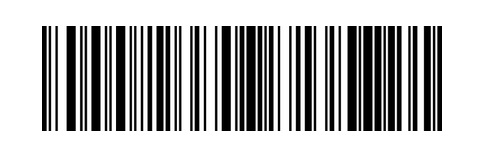
A 1D code, also known as a linear barcode, is a series of black bars and white gaps that encode information. These codes are used to store simple data like product IDs or shipping labels. When a barcode reader scans a 1D-code, it sends light onto the barcode. The black bars absorb more light, while the white gaps reflect it. The reader detects this variation in light and converts the pattern into binary data (1s and 0s) that a computer system can process.
Advantages of 1D Codes
- Cost-Effective: 1D codes are inexpensive and easy to make, making them ideal for large-scale use.
- High Accuracy: With built-in error-checking (using a check digit), they ensure high first-pass read rates, minimizing the chances of scanning errors.
Applications of 1D Codes
1D codes are widely used in:
- Electronics, automotive, and consumer goods industries: for product identification.
- Transport logistics: for tracking shipments.
- Postal shipping: for sorting and delivery of mail.
2D Barcodes
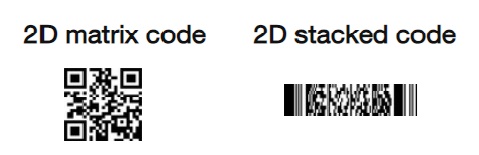
2D codes are a more advanced form of barcodes. Unlike 1D codes, they store data in vertical and horizontal dimensions, allowing them to hold much more information in a compact space. There are two main types of 2D codes: matrix codes and stacked codes.
- Matrix Code: Uses small geometric shapes (like squares or dots) arranged in a grid to represent data.
- Stacked Code: Uses multiple rows of bars, similar to stacking several 1D codes on top of each other.
When a sensor scans a 2D code, it takes a picture of the code. The camera detects the contrast between the black and white areas and translates this into binary data.
Advantages of 2D-Codes
-
Space-Efficient: They require minimal space while storing large amounts of information.
-
Error Correction: They use error-correction algorithms, which can still be read even if part of the code is damaged.
Applications of 2D-Codes
2D codes are versatile and are used in:
- Transport logistics: for tracking shipments and managing inventory.
- Electronics, automotive, and consumer goods industries: for product identification and quality control.
- Pharmaceutical industry: for labeling medicines and medical devices.
RFID
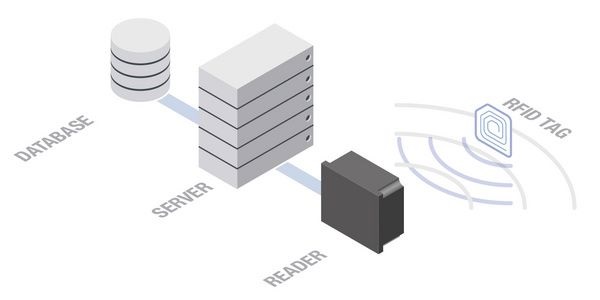
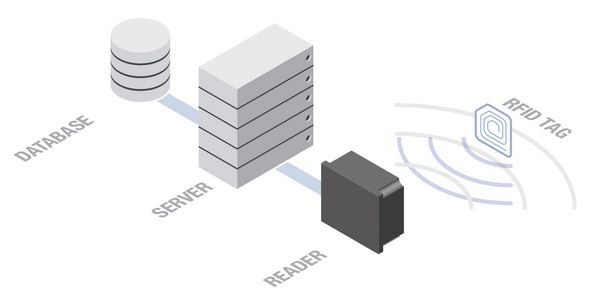
Radio Frequency Identification (RFID) technology takes data transmission a step further by using electromagnetic waves. An RFID system consists of a reader (or transceiver) and a transponder (or tag). The transponder contains a microchip and an antenna, and it stores a unique identifier along with other data.
RFID systems operate at different frequencies:
-
Low Frequencies (LF): 125–134 kHz, used for short-range, low-speed data transmission.
-
High Frequencies (HF): 13.56 MHz, ideal for medium-range applications with moderate data speed.
-
Ultra-High Frequencies (UHF): 865–928 MHz, providing long-range communication but with higher susceptibility to interference.
RFID tags can be either active (powered by an internal battery) or passive (powered by the reader's electromagnetic field).
Advantages of RFID
-
No Line of Sight Required: RFID tags don't need to be in the reader's direct line of sight, as the radio waves can pass through materials like wood, plastic, or cardboard.
-
Robust Performance: RFID systems are durable and work reliably in harsh environments, such as dirty or contaminated areas.
-
Writable Data: RFID tags can be written to, allowing production or quality data to be stored directly on the tag.
Applications of RFID
RFID is used across various industries:
-
Production Control: For tracking materials and components during manufacturing.
-
Access Control: For managing employee or visitor access to secure areas.
-
Object Identification: For identifying and tracking products or containers in warehouses.
-
Material Flow Control: In industries like automotive, where real-time tracking of parts is essential.
Conclusion
Each of these sensor technologies—1D-codes, 2D-codes, and RFID—offers unique advantages for data collection and tracking. From the simplicity and affordability of 1D codes to the compact and high-capacity 2D codes, to the advanced capabilities of RFID systems, choosing the right technology depends on the specific needs of the application. Whether you're tracking packages, managing inventory, or controlling production lines, these technologies help ensure accuracy, efficiency, and seamless operations.
HVH Industrial Solutions is an authorized distributor of Leuze and we offer a wide range of their sensor products. We work closely with their engineering team to provide superior customer service and engineering support.
If you have any questions, write to us via live chat or call or send us a quote request. The HVH team is always ready to help you
Requesting ... File size should not exceed 20 MB.