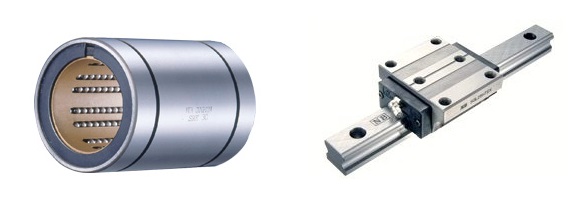
Bearings: Roller Bearings and Plain Bearings
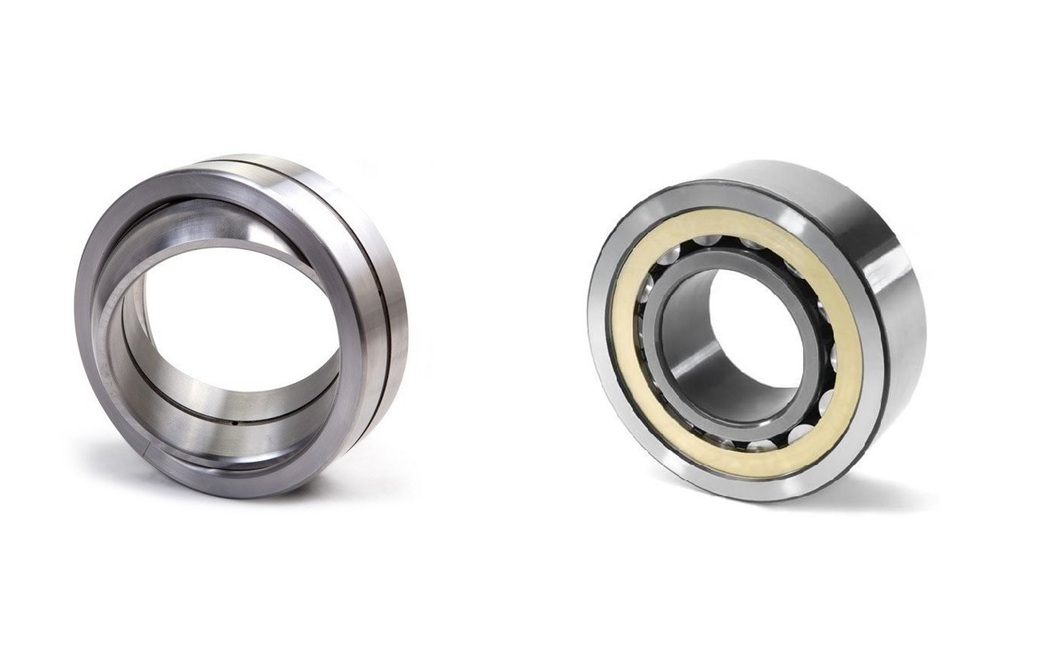
Bearings are an essential component in many mechanical systems, providing support and reducing friction between moving parts. They come in various types, each designed to meet specific requirements. In this article, we will explore two common types of bearings: roller bearings and plain bearings
What are Bearings
Bearings are mechanical components that support and guide rotating or sliding shafts or axles. They enable the transmission of loads while minimizing friction and ensuring smooth motion. By reducing friction, bearings prevent excessive wear and damage to the moving parts of a machine.
Bearings are essential in various applications, from small household appliances to heavy industrial machinery. Without bearings, the efficiency and lifespan of machines would be severely reduced. They provide stability, reduce energy consumption, and enhance the overall performance of mechanical systems.
What are Rolling Bearings
Rolling bearings consist of one or two cylindrical rows of steel balls or rollers placed between the inner and outer rings. The inner and outer races of the bearing incorporate grooves to guide the rolling elements, while a separator maintains equal spacing and allows for lubrication.
The origins of roller bearings can be traced back to ancient times,as the first drawing of a roller bearing is credited to Leonardo da Vinci in 1500 A.D. Since then, roller bearings have undergone significant advancements and have become an integral part of modern machinery.
Rolling bearings excel in handling moderate to heavy loads, making them suitable for various applications. Their ability to withstand high-impact and shock loads is particularly noteworthy. Additionally, due to the increased rolling contact surface area, roller bearings experience less elastic deformation compared to other bearing types, ensuring improved stability and performance.
Characteristics of Roller Bearings
High Load Capacity: Roller bearings can handle higher loads compared to plain bearings due to their larger contact surface area.
Reduced Friction: The rolling motion of the cylindrical rollers minimizes friction, resulting in lower energy consumption and improved efficiency.
Precise Movement: Roller bearings offer more precise and accurate movement, making them suitable for applications that require tight tolerances.
Versatility: Roller bearings are available in various designs and configurations, allowing them to accommodate different loads and operating conditions.
What are Plain Bearings
Plain bearings, also known as straight-bore plain bearings, are cylindrical in shape and designed to support shafts fixed on a plane. Some plain bearings, called flange-type plain bearings, include a perpendicular surface that can be used as a thrust-wearing surface or a positioning component. They are versatile and capable of moving in any rotational direction, whether linear, axial, or radial.
One important distinction among plain bearings is the requirement for lubrication. Some plain bearings need external lubrication between the fixed and rotating members to minimize friction and ensure smooth operation. These standard plain bearings should be lubricated by a person during installation and when necessary during service. On the other hand, self-lubricating bearings, as the name suggests, supply lubrication through the bearing itself, eliminating the need for external lubrication.
Plain bearings are commonly utilized in oscillating shaft applications and extreme service environments where they may be exposed to very low or high temperatures. Their ability to withstand such conditions makes them a reliable choice in various industries, including automotive, aerospace, manufacturing, and more.
Characteristics of Plain Bearings
Cost-Effectiveness: Plain bearings are generally more cost-effective compared to roller bearings, making them a preferred choice in many applications.
Simple Design: Their straightforward design makes them easy to manufacture and install, reducing complexity and cost.
Noise and Vibration Damping: Plain bearings absorb noise and vibrations, contributing to quieter operation.
High Load Capacity: They can handle heavy loads and shock forces effectively.
Self-Lubrication: Some plain bearings are self-lubricating, eliminating the need for external lubrication systems.
Differences Between Plain Bearings and Roller Bearings
Construction and Design
Plain bearings consist of a cylindrical sleeve, while roller bearings utilize cylindrical rollers. The design of roller bearings allows for better load distribution and higher load-carrying capacity compared to plain bearings.
Load Capacity
Roller bearings generally have a higher load capacity than plain bearings due to the increased contact area between the rollers and the raceway. This characteristic makes roller bearings suitable for applications that involve heavy loads and high-speed operations.
Friction and Efficiency
Plain bearings rely on lubrication to minimize friction, whereas roller bearings have rolling elements that reduce friction inherently. The rolling motion of the rollers results in lower energy consumption and improved overall efficiency.
Applications
Both plain bearings and roller bearings find applications in various industries and machinery. Plain bearings are commonly used in low-speed and high-load applications, such as automotive engines, agricultural equipment, and industrial machinery. Roller bearings are preferred in high-speed applications, such as automotive wheels, electric motors, and aerospace components.
Conclusion
Bearings, whether roller bearings or plain bearings are integral to the smooth and efficient operation of mechanical systems. Roller bearings excel in high-load and high-speed applications, providing excellent load-carrying capacity and rigidity. Plain bearings, on the other hand, offer simplicity, cost-effectiveness, and low maintenance, making them suitable for lighter loads and low-speed applications. Understanding the characteristics and applications of roller bearings and plain bearings enables informed decision-making when selecting the appropriate bearing type for a specific application.
HVH Industrial Solutions is an authorized distributor of Link-Belt, Rexnord, Koyo, P.T. International, Smith Bearing, and many other world-class bearing manufacturers. We work closely with their engineering team to provide superior customer service and engineering support.
If you have any questions, write to us via live chat or call or send us a quote request. Our team is always ready to help you.
Requesting ... File size should not exceed 20 MB.