How to Select Sprockets and Identify Wear
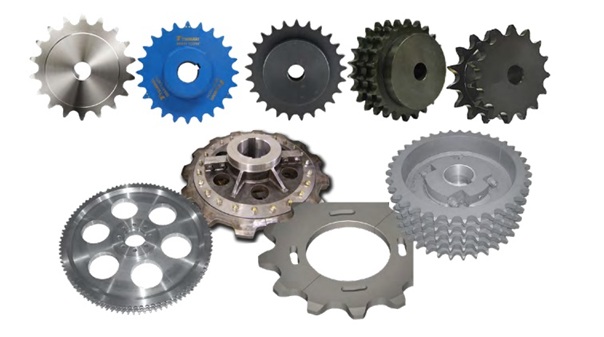
Regarding sprockets, achieving precision and specialization is crucial to ensure an optimal alignment with the chain and the surrounding assembly. The careful selection of a sprocket with the right specifications is vital to enable a smooth and controlled rotation, preventing issues such as slippage, jumping, seizing, or premature breakdown in chain drive and conveying systems. This article offers insights into the functionality of sprockets and guides recognizing the signs indicating the need for sprocket replacement.
What Is a Sprocket?
A sprocket is a mechanical wheel with teeth that interact with roller or conveyor chains to enable their movement in various applications and equipment. As the sprocket turns on a central shaft, its specialized teeth securely engage the gaps in the chain, ensuring effective traction even in dirty or oily conditions. While sprockets may resemble gears, they are uniquely designed to collaborate exclusively with chains and not with other sprockets or gears.
Key Specifications for Sprocket Selection
When choosing a sprocket, several specifications should be considered.
Type: Sprockets are typically categorized into three types: no hub (Type A), a single hub on one side (Type B), or hubs projected from both sides (Type C).
Pitch Diameter: The pitch diameter, representing the imaginary circle passing through the link pin's center while engaged with a chain, helps in selecting the right sprocket for the intended chain.
Number of Strands: The number of strands, referring to rows of teeth, varies from single-strand (common and versatile) to double, triple, or multiple strands for increased torque and power.
Caliper Diameter: Caliper diameter measures the valley from one tooth to its opposing tooth,
Hub Diameter: Hub diameter (for Type B and C sprockets) denotes the outside diameter of the hub.
Length Through Bores: Length Through Bores (LTB) accounts for the hub length, including the sprocket plate thickness.
Sprocket Pitch: Sprocket tooth pitch is based on the corresponding chain measurement from one roller-pin center to the next roller-pin center.
Bore Size: Bore size, the inside diameter of the hole through the hub or plate, must be carefully chosen to accommodate the shaft diameter.
Number of Teeth: The number of teeth reflects the total teeth in the sprocket, tailored to the specific application.
Recognizing Signs of Sprocket Wear
To ensure optimal equipment performance and prevent component damage, regular inspections of sprocket wear are essential. The following guidelines aid in identifying early signs of sprocket wear, helping to prevent premature chain wear, costly equipment failures, and unplanned shutdowns. First, confirm proper engagement between sprocket teeth and the chain, ensuring that individual chain rollers evenly fit into each tooth's valley. Second, pull the chain from the rear of the sprocket; if a visible gap appears, it suggests wear in both the chain and the sprocket. Third, assess the shape of the sprocket teeth, as prolonged contact with chain rollers can lead to sharp or slightly hooked teeth. Finally, examine the sprocket's perimeter for indented wear patterns resembling the chain's shape, serving as a clear indication that sprocket replacement is necessary. Regular attention to these signs is crucial for sustained equipment performance and avoiding unexpected shutdowns.
Conclusion
In conclusion, achieving precision and selecting the right sprocket specifications is essential for maintaining optimal alignment and ensuring a controlled rotation, preventing critical issues in chain drive and conveying systems. By recognizing the early signs of wear and following the guidelines for sprocket replacement, professionals can ensure prolonged equipment performance, minimize downtime, and mitigate the risks of costly failures in industrial applications.
HVH Industrial Solutions is an authorized distributor of Wipperman, Tsubaki, Linn Gear, and many other sprocket manufacturers. We work closely with their engineering team to provide superior customer service and engineering support.
If you have any questions, write to us via live chat or call or send us a quote request. Our team is always ready to help you.
Requesting ... File size should not exceed 20 MB. Are you sure you want to delete file?